
BONG
MK I: An Expressive Interface
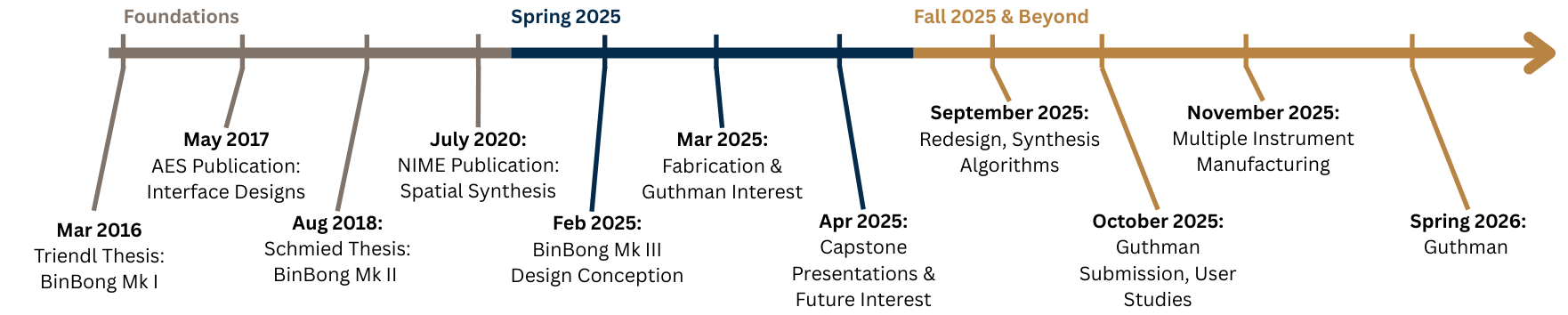
The original BinBong is a haptic musical interface, initially designed as an expressive tool for controlling monophonic synthesizers for melodic play. It is equipped with various force-sensing resistors and an inertial measurement unit (IMU) for tracking the orientation in space. The interface has been developed in collaboration with the SIM (Staatliches Institut für Musikforschung, berlin). Dr. Thomas Lerch, head of the restoration workshop, used materials and techniques from classical instrument building to create high quality mechnical components.
MK II: Spatial Interaction
The second version was realized by Anton Schmied in his master’s thesis Developement and Stress Testing of the BinBong MKII and refined by Yrkkö Äkkijyrkkä. The device, now wireless and equipped with a 9DOF IMU, is best described in the related NIME paper.
MK III: From Controller to Instrument
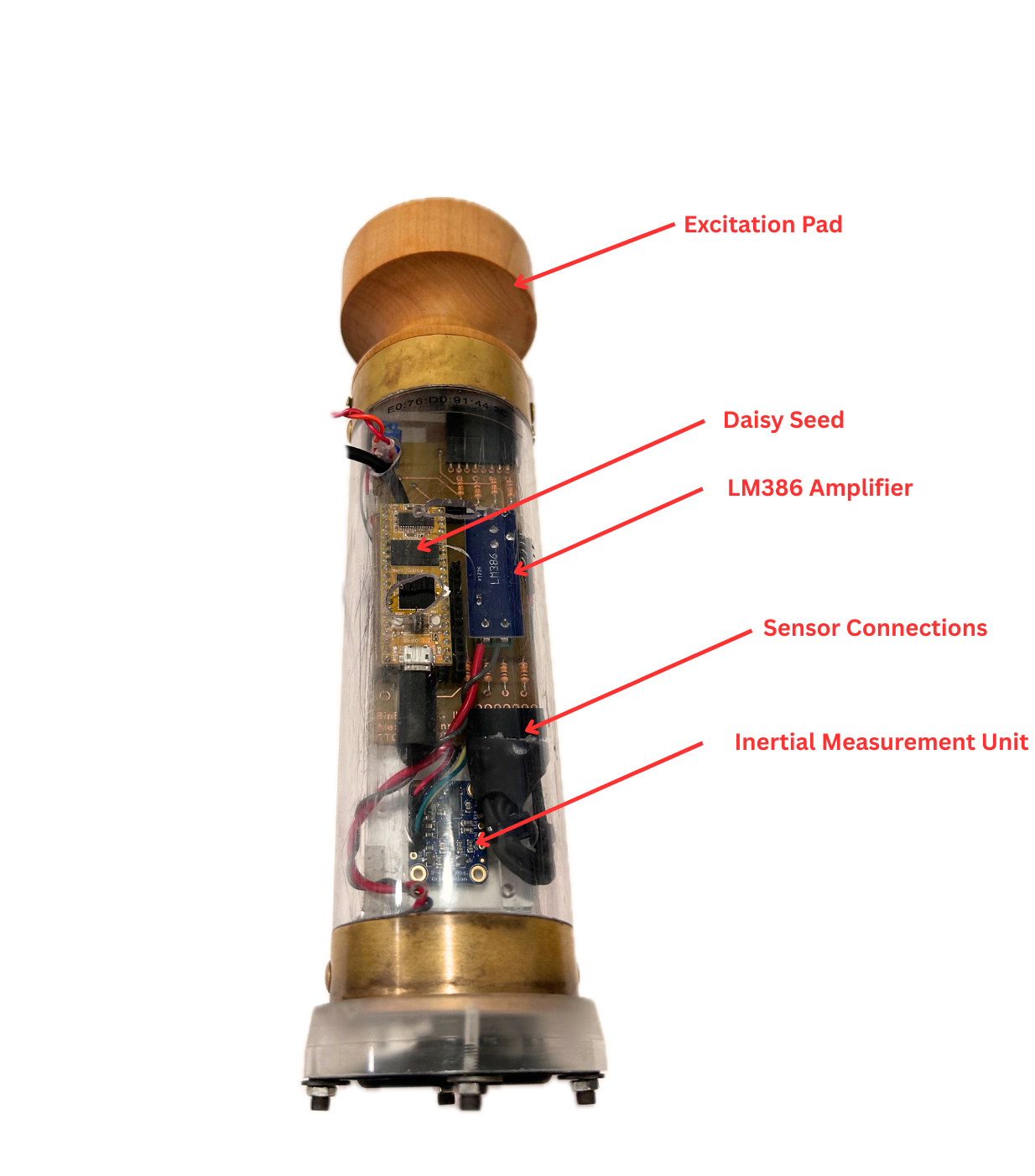
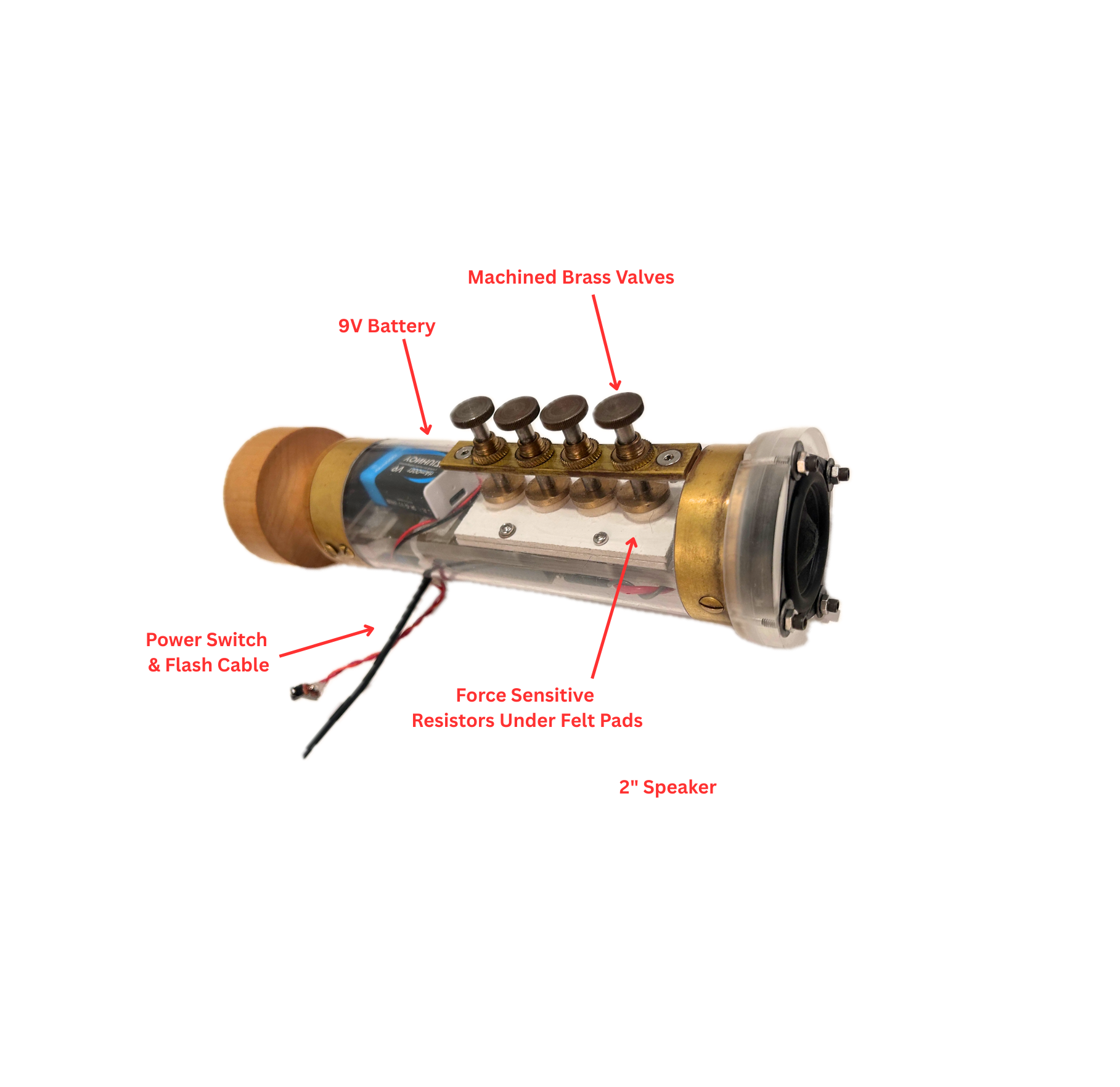
At L42i we are now working on a standalone version of the instrument: By adding a loudspeaker, amp and DSP capacities, the BONG will become a full-fletched instrument. The first prototype of this new iteration was presented in Spring 2026.
Publications2
Henrik von Coler, Steffen Lepa, Stefan Weinzierl: User-Defined Mappings for Spatial Sound Synthesis, Proceedings of the International Conference on New Interfaces for Musical Expression (NIME), 2020
Henrik von Coler, Gabriel Treindl, Hauke Egermann, Stefan Weinzierl: Development and Evaluation of an Interface with Four-Finger Pitch Selection, Audio Engineering Society Convention 142, 2017